Key Takeaways
- Sciatica occurs when the sciatic nerve becomes irritated or compressed, sometimes due to spinal changes or prolonged sitting.
- Gentle stretches, such as the knee-to-chest and hamstring stretches, may help improve mobility and manage discomfort.
- Core and hip strengthening exercises can support stability, balance and everyday movement.
- Move slowly, warm up with gentle movement and stop if symptoms worsen.
- Paul Spring offers RUI FIT fitness programs and wellness classes that support movement, balance and strength at residents’ own pace.
How to Ease Sciatica Pain with Movement
That sharp pain shooting from your lower back down your leg can make simple things feel hard. Standing up from a chair, walking to the mailbox, or getting comfortable at night turns into a chore.
Gentle stretches and strengthening exercises may help manage sciatica symptoms and support everyday movement. The right approach depends on what’s causing your pain and which movements feel comfortable.
What Is Sciatica & Why It Happens
Sciatica occurs when the sciatic nerve, which runs from your lower back down each leg, becomes irritated or compressed. Because the nerve travels from your lower back through your hips and down your legs, symptoms can extend all the way to your foot. The pain can come and go, and it may feel worse after sitting for a long time.
A few common conditions can contribute to sciatica. Arthritis, age-related changes in the spinal discs and conditions that affect the spaces around the spinal nerves can play a role. Tight muscles and prolonged sitting may also contribute to discomfort for some people. Understanding what’s causing your symptoms can help you and your health care provider identify appropriate ways to manage them.
Signs to Watch For
Sciatica can feel different from person to person. Recognizing changes in how you feel can help you decide when to adjust your activities or seek medical advice. Common symptoms include:
- Sharp or aching pain in your lower back that travels down one leg.
- Numbness or tingling that extends into the leg or foot.
- Weakness in the affected leg.
Seek urgent medical care if you develop new or worsening leg weakness, numbness around your groin or buttocks, or difficulty controlling your bladder or bowels.
Gentle Stretches to Ease the Pain
Depending on the cause of your sciatica, gentle stretching may help reduce muscle tightness and improve mobility. These three options can be adapted to your comfort level, but not every stretch is suitable for everyone.
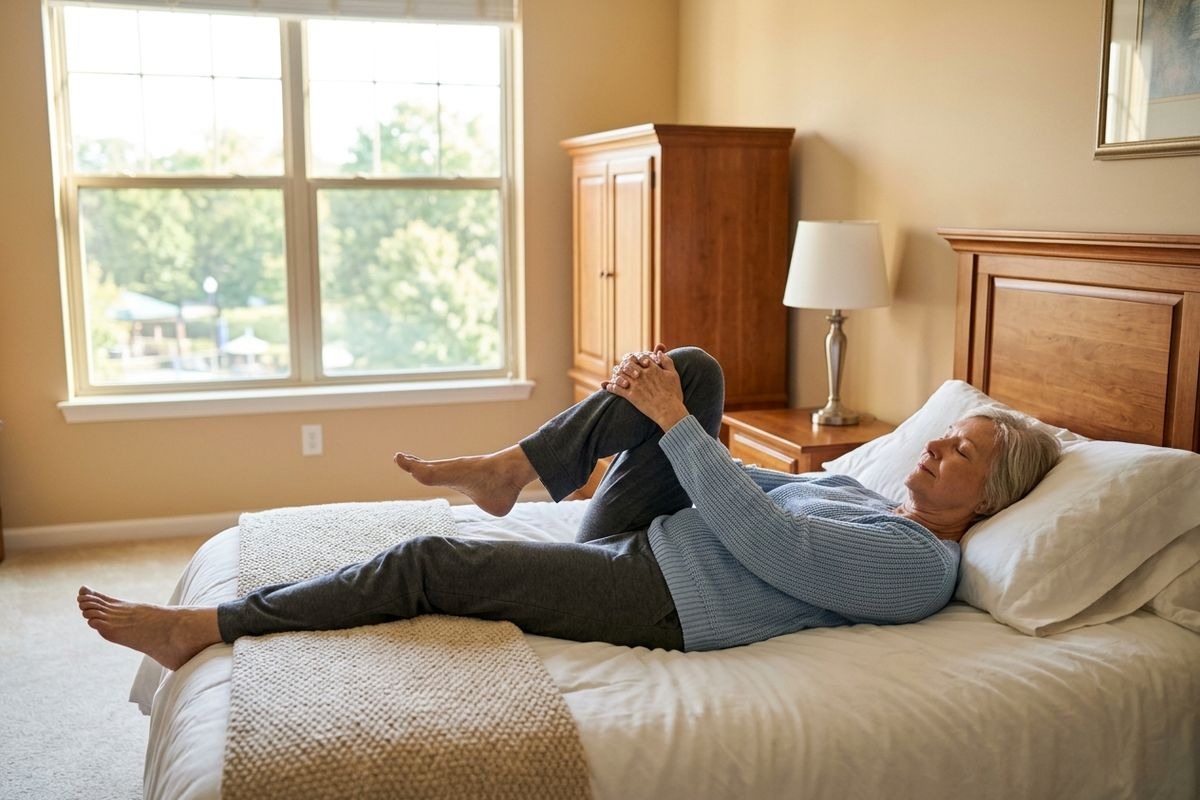
- Knee-to-chest stretch: Lie on your back and gently bring one knee toward your chest. Hold the position while breathing normally, then slowly release. Avoid pulling your knee farther than feels comfortable.
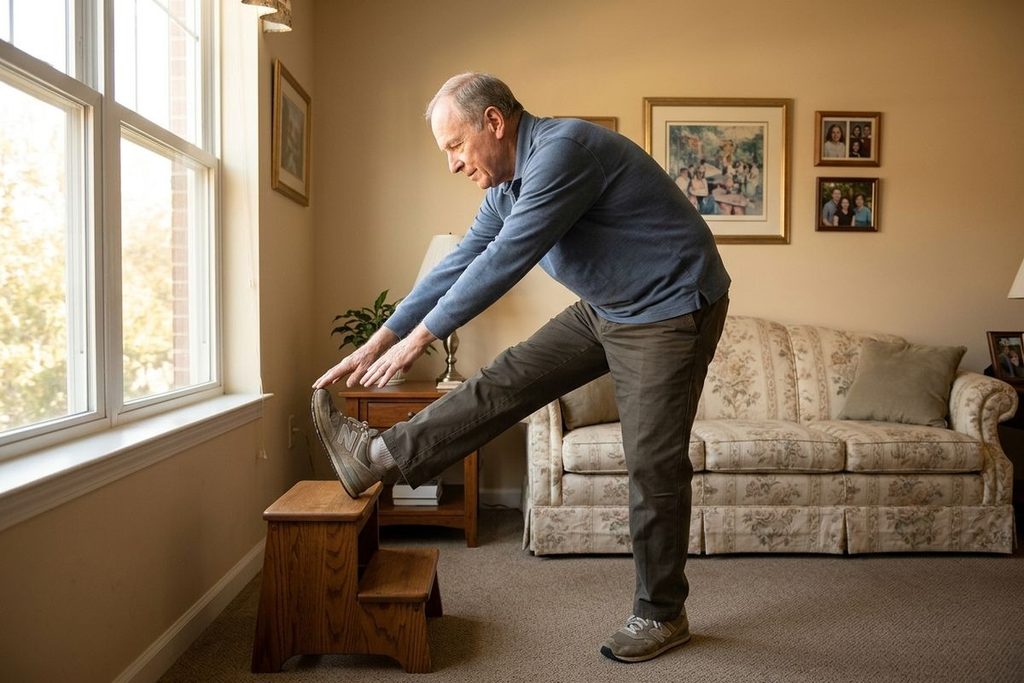
- Standing hamstring stretch: Place your heel on a low, stable step and keep your back straight. Hinge forward slightly at your hips until you feel a gentle stretch in the back of your thigh. Don’t force the movement.
- Seated stretch: Sit upright in a sturdy chair and gently cross one ankle over the opposite knee, if comfortable. Keep your back straight and lean forward slightly only if the movement doesn’t increase your symptoms.
Exercises to Support Your Spine
Stretching focuses on flexibility, while strengthening exercises help build stability. Working the core and hip muscles can support your posture, balance and everyday movements. Start with movements that feel manageable, and build gradually as your strength and comfort allow.
- Pelvic tilts and glute bridges: These exercises engage the abdominal and gluteal muscles while you lie on your back. Begin with gentle pelvic tilts before progressing to bridges if they’re comfortable.
- Bird dog: Start on your hands and knees, then slowly extend one arm and the opposite leg while keeping your back steady. Use a smaller movement or skip this exercise if it causes discomfort.
- Clamshells and seated band abductions: These exercises target the muscles around your hips. A light resistance band can add resistance when you’re ready, but begin without one if needed.
Core & Hip Focus
Your core and hip muscles help stabilize your body as you stand, walk and move through daily activities. Gentle strengthening exercises, including pelvic tilts and standing hip extensions, can help develop stability and control. Practicing controlled movements, such as hinging at the hips, may also help you move more confidently. Choose exercises that match your abilities, and ask a qualified professional for guidance if you’re unsure where to start.
Moving Safely with Sciatica
A little planning goes a long way with sciatica. The goal is steady progress, not pushing through pain.
- Start slow with low-impact activity like walking or water exercise.
- Listen to your body and never push into pain.
- Warm up with light movement before every session.
Stay Active & Supported at Paul Spring
Managing sciatica starts with understanding your body’s limits and finding movements that feel right for you. With gentle exercise, appropriate guidance and small adjustments to your daily routine, you can continue working toward better mobility and comfort.
At Paul Spring, part of Retirement Unlimited, Incorporated (RUI), residents can explore RUI FIT fitness programs and wellness classes that support movement, balance and strength at their own pace. These signature offerings help residents stay active, pursue their interests, and enjoy more of the life they’ve earned and deserve.
Schedule a tour to learn more about our vibrant community.