Key Takeaways
- Hip bursitis happens when a small cushioning sac in your hip becomes inflamed, causing outer hip pain and stiffness.
- Gentle stretches like the hip flexor and figure four can ease tension and support comfortable movement.
- Strengthening moves such as bridges and clamshells help support the muscles around your hip.
- Low-impact activities like swimming and cycling keep you moving without added strain.
- Paul Spring offers RUI FIT classes and a modern gym to help you stay active.
How Hip Bursitis Affects Your Day
That nagging ache on the outer side of your hip can make simple things harder, like climbing stairs or getting up from a chair. You might feel a sharp twinge when you lie on that side at night. Gentle movement can often help you stay comfortable and let you keep doing the activities you enjoy.
Hip bursitis occurs when a small, fluid-filled sac that cushions your hip joint becomes inflamed, and gentle stretches, strengthening exercises, and low-impact activities can help ease the pain and keep you moving comfortably.
What Hip Bursitis Means for You
Inside your hip sits a small sac called a bursa. It cushions the spot where bone, muscle, and tendon meet. When that sac gets irritated, you feel it.
Several things can lead to this kind of irritation, including:
- Everyday wear on the joint over time
- Past injuries or falls that affected the hip
- Arthritis that adds extra stress to the area
The most common signs are pain along the outer hip and a stiff feeling when you start moving. The ache can spread down the side of your leg too. Paying attention to symptoms early can help you manage discomfort before it affects your daily routine.
Gentle Stretches to Ease Hip Tension
Stretching loosens tight muscles around the hip and takes pressure off that sore spot. Move slowly and breathe through each one.
Hip Flexor Stretch
Step one foot forward into a gentle lunge position. Keep your back straight and your front knee over your ankle. Hold for 20 to 30 seconds, then switch sides. You should feel a mild pull at the front of your hip, not a sharp pain.
Figure Four Stretch
Sit tall in a sturdy chair. Cross one ankle over the opposite knee so your legs form a number 4 shape. Lean forward slightly until you feel a stretch in your outer hip and hold for about 30 seconds.
IT Band Stretch
Stand near a wall for balance. Cross one leg behind the other, then lean gently to the side toward the wall. This opens up the long band of tissue along your outer thigh and hip. Hold, then repeat on the other side.
Strengthening Moves to Support Your Hip
Stronger muscles around your hip can help reduce some of the stress placed on the bursa. These moves are simple and use your own body weight.
Bridges
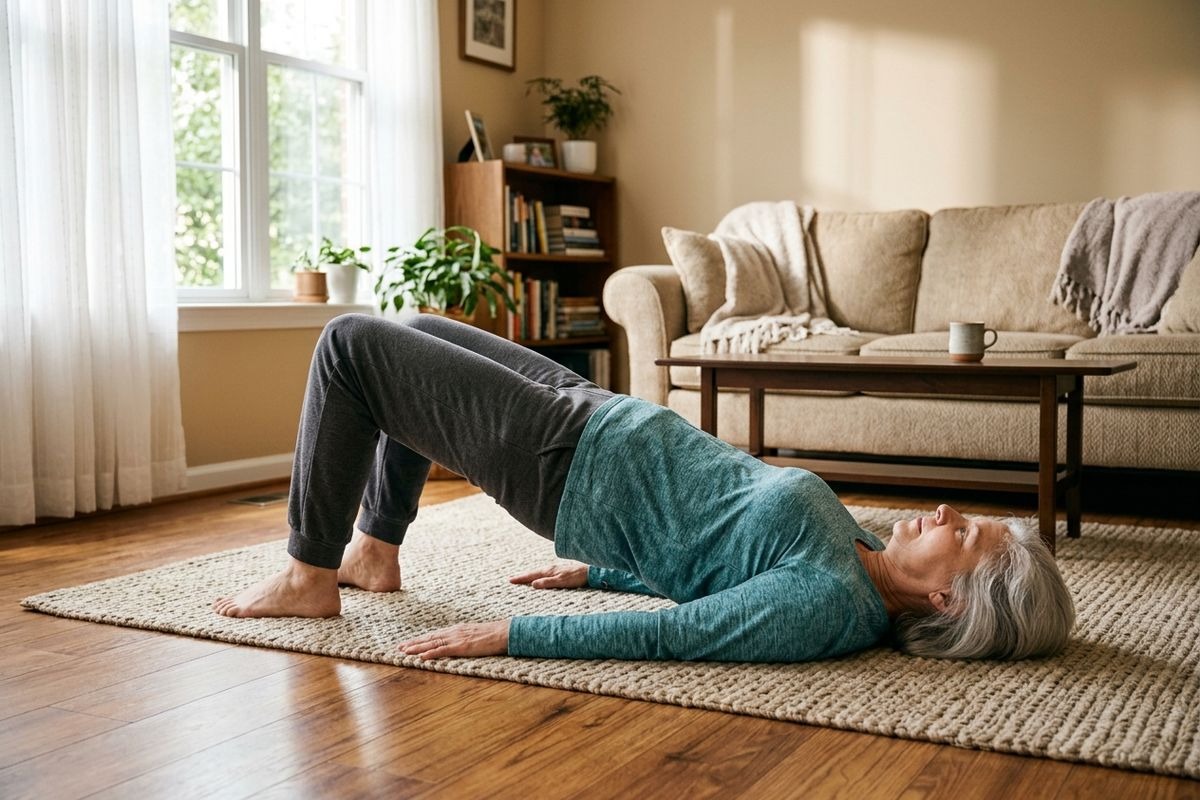
Lie on your back with knees bent and feet flat on the floor. Lift your hips toward the ceiling while squeezing your glutes. Hold briefly, then lower down with control. Start with a few repetitions and build up slowly.
Clamshells
Lie on your side with knees bent and feet together. Keep your feet touching and lift your top knee like a clamshell opening. Lower it back down slowly. This targets the muscles that stabilize your hip.

Standing Hip Extensions
Hold the back of a chair for support. Slowly lift one leg straight back behind you while keeping your torso upright. Bring it back down with control and repeat. Keep the motion smooth and steady.
Low-Impact Activities & Safety Tips
Staying active keeps your hip flexible without adding strain. The key is choosing gentle movement and listening to your body.
Easy Activity Options
Some low-impact choices can keep you moving comfortably, including:
- Swimming, which gives you full-body movement while the water supports your joints.
- Seated marching, which boosts circulation while you stay in a chair.
- Cycling at low resistance, which keeps your legs moving without pounding the hip.
Moves to Skip
Some activities put too much pressure on an irritated hip. For now, consider avoiding running and jumping. You can also skip deep squats and lunges until your hip feels stronger and more comfortable.
How to Stay Safe
A few simple habits keep your routine gentle and steady:
- Warm up for 5 to 10 minutes before you start.
- Move slowly and stop right away if you feel sharp pain.
- Aim to practice these exercises 3 to 5 times each week.
Progress comes from consistency, not intensity. Small, regular efforts add up over time.
Stay Active & Supported at Paul Spring
Keeping your hips strong and flexible can make everyday movement feel more comfortable. Gentle stretching, strengthening, and low-impact exercise can all play a role in supporting your mobility over time.
At Paul Spring, part of Retirement Unlimited, Incorporated (RUI), staying active is part of everyday life. RUI FIT wellness classes and a modern gym give you fun ways to stay strong and flexible. Friendly staff are there to help you find movements that feel right for you.
After a workout, you can enjoy restaurant-style dining and relax in beautiful outdoor spaces. You’ll find welcoming spaces, engaging programs, and opportunities to stay connected every day.
Contact us to learn more about how Paul Spring supports an active, connected lifestyle.